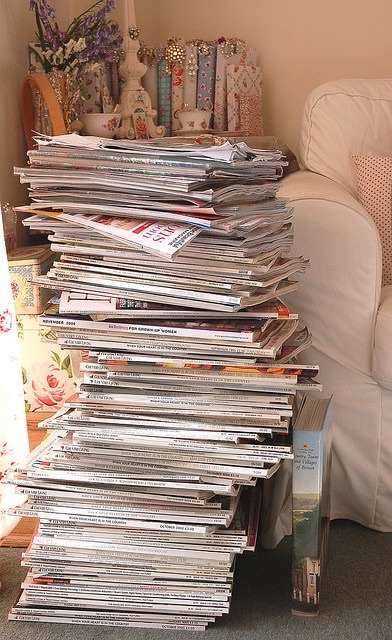
Space: where stars hover and particles crash together. Where missions hang suspended amidst dwarf planets, red stars, gasses, moons, and the unknown. Space: where things are kept. Space: the distance between things. It seems the more I put around me, the more distance I find between myself and others. We are all crammed together under the roof. You, me, and the boxes. You, me, and stacks: dishes, magazines, laundry, books. Sometimes all at once. Sometimes it stands close to the ground in carpets— other times it’s so high I feel I’ll drown in it.
When I pack for yet another trip, I am thinking about space. This is weeks before the moon launch, before Ryan Gosling and sentient rocks, before not being able to turn a corner without that Harry Styles song BLASTING from the rooftops. When my mind was turned to space I was busy packing for a trip I have now long since settled into– the bags I packed then are now emptied out, folded away, and gathering Utah dust. I’m behind in my cataloging, but time is something my writing folds neatly towards me; with words, time is something inconvenient.
I thought about space as I packed in Missouri.
My parents live in an old house. It’s a small house– it wouldn’t be a lot of space for most six person families, let alone us wild, collecting, grasping homeschoolers. It was less of a move then a release of a dam. Of course we found our ways to wade; my father assembled a wall to ceiling shelf for my mothers curriculum, and when that didn’t prove enough did it a second time for the vintage collection. Books in everyone’s bedrooms, two shelves in the dining room, one in the living room, and often stacks in the bathroom, growing mold spots and gathering dust. It was many years later that I heard the theory that all objects give off energy, and the more clutter you gather the more energy is forced onto you. I could remember closing my eyes in that house, not just to the books and the people, but to the dishes, the ever-tumbling laundry, the rocks and pebbles, toys, drawings, cardboard boxes, vintage treasures, broken computer parts, torn blankets, yarn, thread, cloth, and thoughts– even when the people left, the objects were left behind.
It wasn’t as if we were left with a clean slate– when my parents decided to move us to the country, it was a decision to build on my great-grandmothers life. While we tore down walls, hammered down nails, and ripped out wiring, we cataloged old clutter. This is why the attic has become such a haunted place– it was never empty, even from the first day.
As I packed for my work in Utah, to the new job, the new start, I knew that I would have to dig. I have been a sort of tumbleweed in my parents lives for the past two years, coming and going with things, items, gifts, souvenirs, art– I come and I go, but the things are left behind. I had, and still have, a feeling that this last visit would be the last of its kind. No more arrivals without a sure departure date, no more last minute “figuring things out” visits, and no more things. I promised my mother that I wouldn’t just pack, but weed. This is why, with only a week before I moved out, I dove into the attic.
I don’t remember a time when I didn’t know we were a different kind of family– I try to think back on it, and even in my earliest memories I see my mother’s flushed face, quickly hiding away garbage, using her body to block laundry, toys, stray homework. At that same young age, I knew that other people’s houses looked like ours… sometimes. People had kids, had jobs, some had farms, and life meant clutter. But I knew the look on the visitors faces, the unplanned “just popping in” visitors– I knew why they didn’t sit down to stay.
When I dive into the attic, it’s not just things, but the crumbs of things. Stacks of boxes, some open, some broken. Last summer my parents made half a payment on my sister’s college, and as pay back she cleared a path in the wobbling walls of THINGS in the attic. She gave me a look I can only call pitying when I praised her for it. “That’s the most I could do.” she told me. Mariah’s hard-fought path is the only reason I can attempt to wriggle into the space– a v-shaped roof, broken floorboards, and in between every box dust, dead hornets, mud-dobber nests, insulation. It’s not just boxes that the crumbs cover– as I begin to sift through for my left-behinds, I clear off broken picture frames, trash bags of childhood toys, long-outgrown shoes. I open up a plastic box the size of a bathtub and find exactly three hats and one scarf. In the corner is a haphazard pile of paintings that my father BEGGED me to keep for his office– they lay in a heap then, college class oil paintings sticking with dust and broken glass. I begin searching through any boxes within reach, not wanting to return to the rubble if I don’t have to. I crack open a box of grade school math books and find two separate dirty socks laid on top.
I take deep breaths and leave the attic.
I decide to rid myself of as much of this space-eating STUFF as possible– I keep breathing deep as I read the twenty, thirty journals from ages very small to very ashamed. I read, toss, surgically remove, and label– “October-December 2024, London” and “Age 14 Sketchbook.” The longer I comb, the more I feel the vibrations– I close my eyes, and I hear it all rattling it towards me– a tsunami of THINGS barreling towards me, even in the dark-
My great grandparents taught their children, and my parents, to save. Growing up we played on the rusted tractors, the abandoned tires in the field of my grandfather. It’s high and mighty for me to say I’ll do better, because you can’t see the unwashed dishes in my sink, the Cafe Bustello can I’m using as an ashtray, the 3 off-brand cola cans decorating the little kitchen table I call my writing desk. Whatever my mother gathered was taken from somewhere, and who’s to say I haven’t drank the Koolaid, too?
It’s hard not to see my grandparents when I close my eyes in my parents house. My great grandparents on both sides, the ones that grew gardens and washed their aluminum foil, the one that starched crocheted ornaments and as legend says, invited her whole church to follow her home for lunch and they did. The ones that built their own houses, one stuffing newspaper clippings celebrating new american runner Jesse Owens. The ones with a basement of old toys and a hollow place under the stairs that my sister and I played in. The worried ones. I met these people, and I knew them. My mother lived with hers during her parents divorce, in the old A-frame that I have never seen, but hear about sometimes.
Her grandparents knew the depression- they knew war, and they knew that if you thought about it hard enough, held on to enough, you could make it one more day. My mother- she tells me about watching her father dump all her toys in the trash. I don’t know what this had to do with the divorce– but what do children ever really have to do about the divorce? They’re always there in the middle. Sometimes they catch the crossfire, and sometimes that crossfire is watching their father, barely more than a boy himself, throwing their dolls into the dumpster.
I had a hard time throwing away my toys. I remember every one that I ever lost– sometimes I’m convinced that I’ll bump into each other again someday. We’ll walk past each other in the city and wave excitedly, over the moon to hear how each other’s lives have gone. Maybe my lost toys decided to go the career route– I can see them, my pink poodle, my orange tiger, running some law firm , taking calls, knocking down doors, taking on the big bad insurance companies, crooks, abusers. Though Fifi and Snoogums would make for an awkward name for a law firm.
The question really is, do whole children remember their lost toys this clearly? Whole grown ups certainly don’t wash tinfoil, collect broken tractors, or surround, surround, surround with books. I can’t really be sure if the bloodline began with the panic of being unprotected, or the habit of protecting– maybe, a long time ago, it was more frightening to be untethered in the vastness of this universe. Maybe it all started because one of us felt very, very alone.
I tell myself this as I pack– I run to burn bags of old papers, books, schoolwork before my mother comes home. To her, it’s not garbage that I’m throwing away. I’ve always been susceptible to the argument, too– who will I be if I don’t fill my space with reminders? How will I know who I am without my things?
I burn with guilt and glee- in the fresh air of the outdoors, standing in front of the roaring wood-furnace, I close my eyes again. I tell myself, like some sort of chant, that I am myself without the drawings, the cheap toys, the ripped books.
You will be loved enough to throw it away— you will be loved enough to toss out the bridesmaids bouquet from someone you don’t talk to anymore. You will find the love to let go of paper clippings from magazines you don’t read anymore. You will be loved enough to toss them out and realize you don’t feel their absence— only the free, glorious space that is your own.
There is love without reminders. There is individuality without proof. There is safety without armour.


Leave a Reply